Hypoxia
The ClimbHypoxia is oxygen deprivation, a central and escalating danger in the Death Zone above 8,000 meters. In the 1996 storm on Mount Everest, it impaired climbers already struggling to find their way to camp, while dwindling oxygen and imperfect communications made coordination and rescue more difficult.
Definition and Conditions
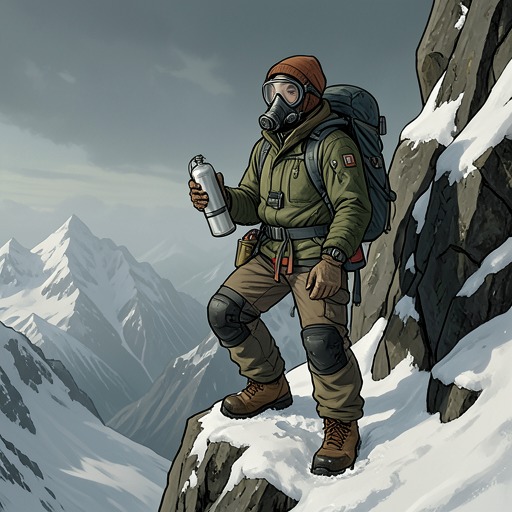
The Death Zone is the elevation above 8,000 meters where prolonged exposure to subzero temperatures and oxygen deprivation can quickly become fatal. During the storm, climbers could see only a short distance; where ropes were available, they served as guides and points of security. As oxygen-tank gauges fell to zero, hypoxia further undermined rational judgment. The danger was not a single isolated symptom but the convergence of altitude, cold, darkness, and diminishing equipment during an already difficult descent.
Expedition Preparation and Equipment
Before the summit push, Mountain Madness established an acclimatization plan: clients would climb to progressively higher camps, carry only personal equipment on the excursions, and rest between stages so the guides could assess their condition. The first excursion aimed for 6,100 meters without an overnight stay. The plan was intended to prepare climbers for a summit bid and subsequent descent to an altitude to which they had acclimatized; the evidence also records that readiness remained something the guides needed to evaluate at higher elevations.
Oxygen at the high camp was limited. Mountain Madness had 62 canisters at Camp IV: nine heavier Zvesda bottles reserved for sleeping and 53 lighter Poisk bottles set aside for the May 10 climb. Five of the six climbing Sherpas planned to use oxygen, and the Sherpas carried 21 bottles for themselves and the clients. The six clients, Scott Fischer, and Neal Beidleman carried 17 bottles in total, while Anatoli Boukreev carried one. The climbers took 38 Poisk canisters up the mountain, leaving 15 full Poisk bottles at camp, along with any remaining Zvesda oxygen. That reserve was too small to support an overnight delay and a second summit attempt: the team had effectively one opportunity on May 10.
Summit Route and Rising Risk
The oxygen constraints existed alongside other limits on the route. Clients expected the fixed ropes between Camp IV and the summit to be in place before they reached the Balcony, but the Sherpas had not left early to fix them. The climbers instead encountered a route on which the expected advance preparation had not been completed. This gap mattered in the Death Zone, where waiting and exertion consumed time and oxygen that the plan had meant to conserve.
The summit strategy also lacked a definite turnaround time communicated to Fischer’s clients. Fischer had discussed with Beidleman and Boukreev a plan in which the guides and Lopsang Jangbu Sherpa would alternate leading, Fischer would bring up the rear and turn back stragglers, and he would contact Lopsang by radio if problems arose. Neither Beidleman nor Boukreev received a radio. The system therefore depended on the position of the lead Sherpa and on communications that could not directly connect all of the guides.
Storm, Communication, and Consequences
On May 10, climbers from several expeditions gathered at the Balcony, where they changed oxygen canisters and rested before continuing. At that altitude, Martin Adams described the shift from being barely able to think to being unable to think at all. The scene links hypoxia not only to physical survival but also to the ability to make decisions and follow a route under pressure.
As the storm developed, communications between Base Camp and the climbers were relayed through several people and camps. Dr. Ingrid Hunt reported that messages passed through Ngima Sherpa, Gyalzen Sherpa, and Pemba Sherpa, and that she was not receiving information she considered complete or accurate. She moved between the Mountain Madness and Rob Hall camps to seek updates, while radio contact with Pemba was sporadic. In such conditions, hypoxia and dwindling oxygen were compounded by difficulty learning where climbers were and what help they needed.
After reaching Camp IV, Boukreev asked Pemba Sherpa to prepare more tea in anticipation of descending climbers, then went to the tent he had shared the previous night with Adams, Lene Gammelgaard, and Klev Schoening. The radio reports and growing emergency above the Hillary Step were not conveyed to him then. The episode illustrates how the presence of supplies and a potential rescuer did not by itself ensure a timely response when information failed to reach the people positioned to act.
Narrative Significance
Hypoxia in this account is both a physiological hazard and a pressure on collective decision-making. The available oxygen was counted, divided among climbers, and assigned a specific purpose; the fixed ropes and radios were likewise essential parts of the expedition’s infrastructure. Yet those resources were constrained or unavailable at crucial moments. By placing oxygen depletion beside route delays and fragmented communications, the narrative shows how danger accumulated: impaired judgment made orientation harder just as limited supplies and unreliable coordination narrowed the options for descent and rescue.